
CHILDREN UNTOLD (Watashi no shiranai kodomotachi, NISHIKAWA Miwa, 2026)
di Claudia Bertolé
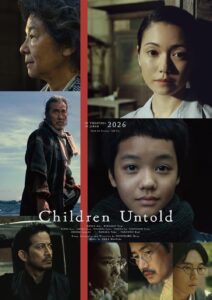
Scroll down for the English version
Una ragazzina nell’orrore della guerra: con uno sguardo al Neorealismo italiano, Nishikawa Miwa racconta una storia di ferite, di perdite, di traumi, ma anche di reazione e di affetti in un contesto storico ben preciso – siamo nel Giappone del dopoguerra – e lo fa attraverso gli occhi e la sensibilità di una giovanissima. Un’opera dolorosamente attuale, che commuove e fa riflettere sulle conseguenze di qualsiasi guerra sulle giovani generazioni, e sull’essere donna in ogni tempo.
È il 1945, Kotoko ha dodici anni nella Tokyo del dopoguerra. Ha perso la famiglia durante i bombardamenti, si ritrova sola in un mondo devastato e per sopravvivere si finge un ragazzo e si unisce ad un gruppo di orfani come lei. Rubacchiano, fanno lavoretti, si arrabattano come riescono sotto la protezione di una banda locale. Intanto Sone, l’insegnante di Kotoko che si sente in colpa per non essere riuscita a proteggerla, pur tra mille difficoltà cerca di ritrovarla.
Nishikawa Miwa, scrittrice e regista, originaria di Hiroshima, decide di affrontare per la prima volta una storia ambientata nel periodo della Seconda Guerra Mondiale, e lo fa prendendo spunto da una propria opera letteraria non ancora pubblicata. Dopo le luci e ombre di personaggi come la famiglia di Wild Berries (Hebi ichigo, 2003), la coppia di fratelli in Sway (Yureru, 2006), il vedovo di The Long Excuse (Nagai iiwake, 2016) e l’ex galeotto di Under the Open Sky (Subarashiki sekai, 2020), entra ancora più in profondità nella fragilità delle relazioni umane ponendo questa volta al centro del racconto una giovanissima, interpretata dall’esordiente Koyae Amy.
Soprattutto la guerra e le devastazioni che l’accompagnano sono al centro della riflessione: in uno scenario simile è indispensabile crescere in fretta, proteggendosi per quanto possibile, stabilire legami. Kotoko è la personificazione della resilienza: il suo sguardo giovane e puro cerca in continuazione uno spiraglio per guardare oltre, per trovare una strada che le permetta di sopravvivere. La strada, sembra indicare la regista, sono le relazioni umane, quella rete di protezione che a poco a poco si ricrea, e che assume forme inaspettate. Le “famiglie” che rinascono dalle macerie sono formate da orfani come Kotoko, a cui poi si uniscono gli anziani che li aiutano. Questi ultimi nel film hanno il volto di due icone del cinema nipponico: Yakusho Kōji e Tanaka Yūko.
La stessa Nishikawa ha dichiarato di aver voluto realizzare un film sulla guerra che i genitori potessero mostrare ai figli. Children Untold racconta l’orrore attraverso uno sguardo limpido, con un messaggio forte di speranza. Ma allo stesso tempo pone una domanda importante sul costo che giovani vite devono pagare a causa dei conflitti.
Attorno a Kotoko gravitano personaggi le cui storie si intrecciano con la sua e contribuiscono a rendere completo il quadro di un dolore collettivo: l’insegnante costretta a prostituirsi per sopravvivere ma che non perde la speranza di ritrovarla, il fratello ferito troppo profondamente dal trauma che ha vissuto, il ragazzino coreano che subisce le violenze della discriminazione, gli anziani illuminati che accolgono i bambini in fuga.
Nishikawa intesse un affresco di sguardi e lo arricchisce di un elemento prezioso: la musica. La musica è la compagna di Kotoko, lo è fin da quando era molto piccola, il padre e il fratello erano musicisti, è il suo collegamento alla famiglia, alla memoria, è la ricchezza che si porta dentro e che protegge. La colonna sonora del film è stata composta da Hara Marihiko, premiato ai Japanese Academy Awards per la colonna sonora di Kokuhō (Lee Sang-il, 2025), ed è stata registrata in Italia con la Roma Film Orchestra.
Titolo originale: わたしの知らない子どもたち(Watashi no shiranai kodomotachi); scritto e diretto da: Nishikawa Miwa; fotografia: Kasamatsu Norimichi; montaggio: Kikuchi Tomomi; musica: Hara Marihiko; interpreti: Koyae Ami (Kayano Kotoko), Sone Fumiko (Nikaidō Fumi), Takenouchi Yutaka (Kayano Koichi), Sakurai Kaito (Kayano Ritsuo), Hiroe (Hanase Kotone), Yakusho Kōji (Yamai Jinbe), Tanaka Yūko (Yamai Kei); produttori: Daiju Koide, Itō Taichi; uscita in Giappone: 16 ottobre 2026; durata: 150’.
English review (translated)
A young girl in the horrors of war: drawing on the influence of Italian Neorealism, Nishikawa Miwa tells a story of wounds, loss and trauma, but also of resilience and human affection, set against a very specific historical backdrop: post-war Japan. She does so through the eyes and sensibility of a very young girl. A painfully relevant work that moves us and invites reflection on the consequences of any war for younger generations, and on what it means to be a woman in any era.
It is 1945. Kotoko is twelve years old and lives in post-war Tokyo. Having lost her family in the air raids, she finds herself alone in a devastated world. In order to survive, she disguises herself as a boy and joins a group of orphans like herself. They steal, take on odd jobs and struggle to get by as best they can, under the protection of a local gang. Meanwhile, Sone, Kotoko’s teacher, haunted by guilt over her inability to protect the girl, does everything she can to find her again, despite the many difficulties she faces.
Nishikawa Miwa, writer and film director originally from Hiroshima, has chosen to explore a story set during the Second World War for the first time, drawing inspiration from one of her own as-yet-unpublished literary works. Following her explorations of the light and dark sides of characters such as the family in Wild Berries (Hebi ichigo, 2003), the pair of brothers in Sway (Yureru, 2006), the widower in The Long Excuse (Nagai iiwake, 2016), and the former convict in Under the Open Sky (Subarashiki sekai, 2020), she delves even deeper into the fragility of human relationships. This time, she places a very young girl at the heart of the story, portrayed by newcomer Koyae Amy.
Above all, it is war and the devastation it brings at the heart of the film’s reflection. In such circumstances, growing up quickly becomes essential: one must protect oneself as best one can and forge bonds with others. Kotoko embodies resilience: her young, innocent gaze constantly searches for a glimmer of light, for a way to look beyond the present and find a path that will allow her to survive. That path, the director seems to suggest, lies in human relationships, in the protective network that gradually takes shape once again, often in unexpected forms. The “families” that emerge from the rubble are made up of orphans like Kotoko, who are later joined by elderly people willing to help them. In the film, these older figures are brought to life by two icons of Japanese cinema: Yakusho Kōji and Tanaka Yūko.
Nishikawa herself has stated that she wanted to make a film about war that parents could share with their children. Children Untold conveys the horrors of war through an unclouded gaze, carrying a powerful message of hope. At the same time, however, it raises an important question about the price young lives are forced to pay as a consequence of armed conflicts.
A number of characters revolve around Kotoko, their stories intertwining with hers and helping to complete the picture of a shared, collective suffering: the teacher forced into prostitution in order to survive, yet never giving up hope of finding her again; her brother whose spirit has been deeply scarred by the trauma he has endured; the young Korean boy subjected to discrimination and violence; and the enlightened elderly people who take in children fleeing.
Nishikawa weaves together a tapestry of perspectives and enriches it with a precious element: music. Music is Kotoko’s constant companion, as it has been since her earliest childhood. Her father and brother were musicians, and music represents her connection to her family and to her memories; it is an inner treasure she carries within herself and which she protects. The film’s score was composed by Hara Marihiko, winner of a Japanese Academy Award for his score for Kokuhō (Lee Sang-il, 2025), and recorded in Italy with the Roma Film Orchestra.
Original title: わたしの知らない子どもたち(Watashi no shiranai kodomotachi); screenplay: Nishikawa Miwa; director: Nishikawa Miwa; cinematographer: Kasamatsu Norimichi; editing: Kikuchi Tomomi; music: Hara Marihiko; cast: Koyae Ami (Kayano Kotoko), Sone Fumiko (Nikaidō Fumi), Takenouchi Yutaka (Kayano Koichi), Sakurai Kaito (Kayano Ritsuo), Hiroe (Hanase Kotone), Yakusho Kōji (Yamai Jinbe), Tanaka Yūko (Yamai Kei); producers: Daiju Koide, Itō Taichi; first release in Japan: 16 October 2026; running time: 150’.